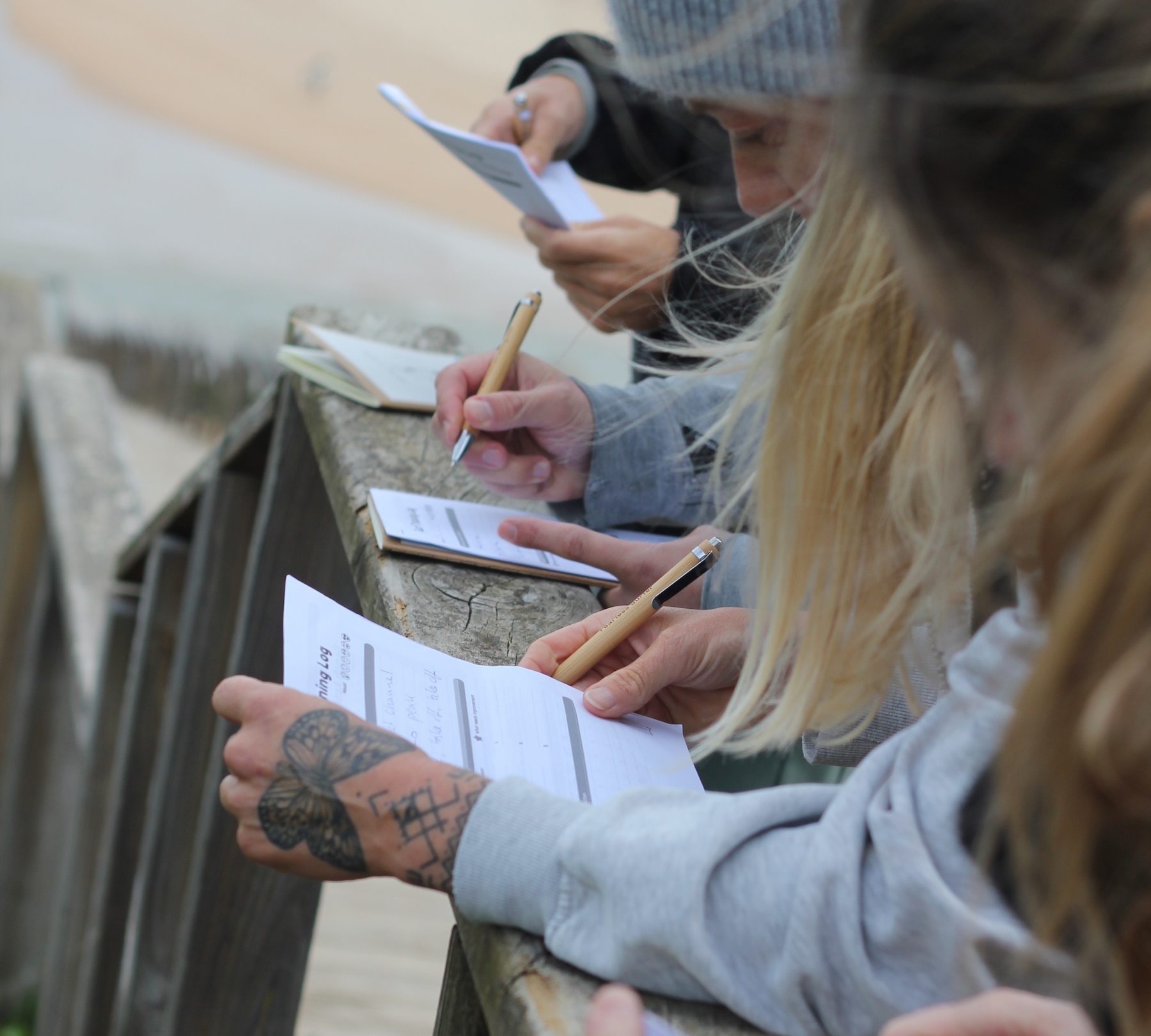
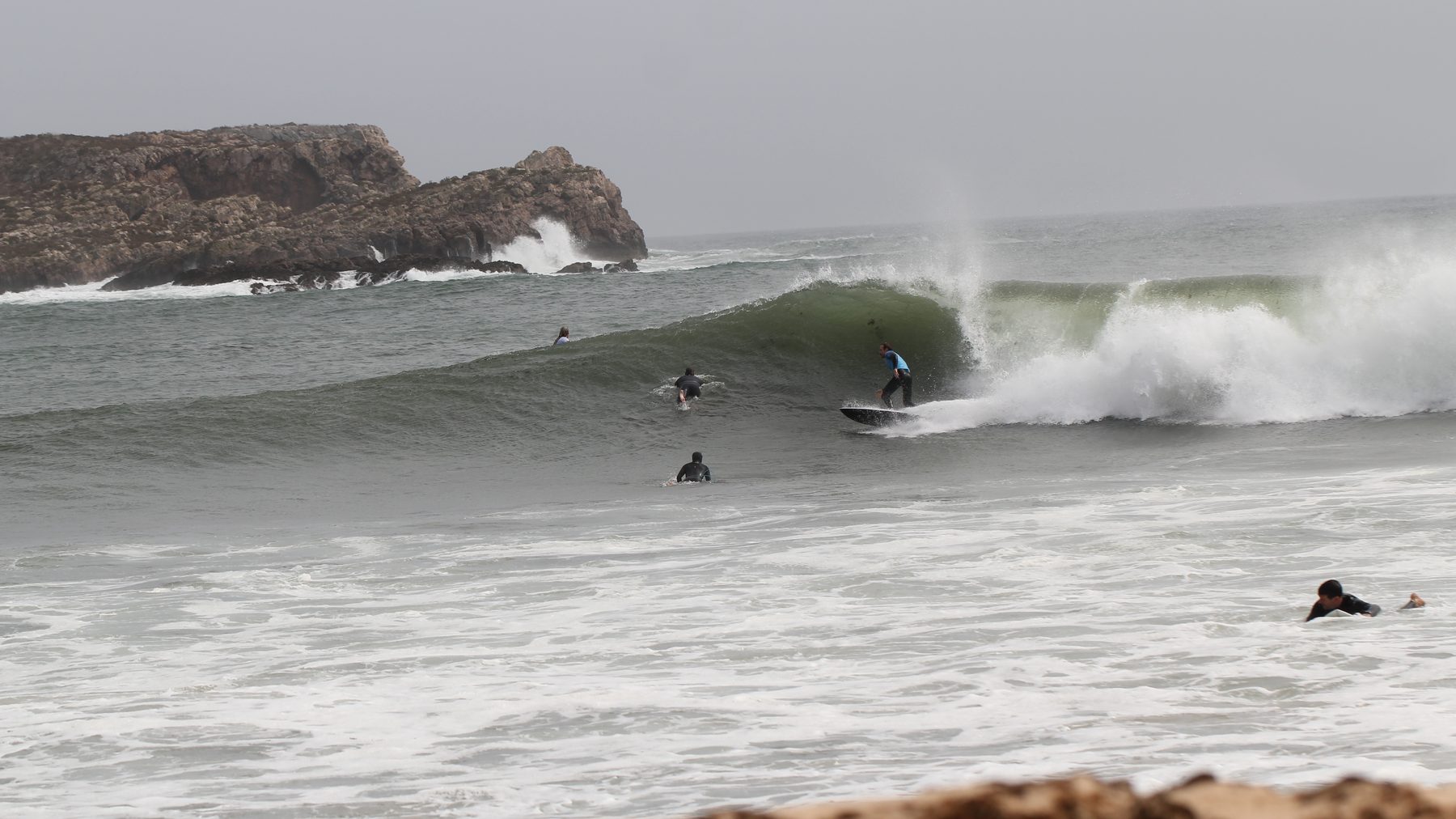
Every link in surfing has four phases. We work out which one is failing and why, then build the training around that one thing. Coaching led by a sport scientist and physiologist, so the plan follows how skill and capacity are actually built, not how a session felt on the day.
01The Concrete Surfers Training Method
Surfing develops when each maneuver links into the next, with the speed and the control carried through.
A good ride isn't a list of maneuvers. It's each one feeding the next: the way a turn finishes decides how much speed and control you carry into the one after it. That connection is what we call the link, and it's what we train. When you get tired, or the wave gets bigger and faster, the maneuver itself usually still happens. What goes first is the connection between them.
Every link runs the same four phases, in order. Knowing which phase is failing is what turns "get better at surfing" into something you can actually train.
Where the method comes from
A coach who is also a sport scientist.
Vasco is a sport scientist and physiologist. That is not a line on a CV here — it is why the coaching is built the way it is, on principles that hold whoever you are:
Specificity
You get better at what you actually practise. So we train the movement of the link, not a general idea of fitness.
Volume of correct repetitions
Skill is built on attempts that are done right. A wave gives you one; an hour on concrete gives you fifty, each one correctable.
Transfer
Land work only counts if it survives contact with water. That is why nothing is taken on trust and everything is re-filmed.
Capacity before technique fails
Technique collapses when you run out of paddle, legs or air. Strength and conditioning is there to move where that collapse happens.
What we do not do: claim a study proves your bottom turn. The evidence sets the shape of the training. Your own footage decides whether it worked.
—The four phases, and the six ways a link breaks
Phase 01
Read
What the wave is offering right now: the lip, the pocket, the shoulder. Then choosing the moment to commit. Timing lives here.
Phase 02
Commit
You go, and you perform the maneuver. Governed by where your weight goes: in the pop-up the front foot takes around 72% of the landing load.
Phase 03
Exit
You land, or settle back onto the rail. This is where maneuvers are blown. A move isn't yours until the exit is controlled.
Phase 04
Link forward
The exit sets up the next read. Clean out, eyes already on the next section, no dead moment.
Most coaching drills the mechanics, because the mechanics are what you can see.
Get the read wrong and the next three phases all look broken, when none of them were the problem.
This is why we always check upstream first. A late read puts you in the wrong place, and from there the mechanics, the exit and the next turn all look wrong. Work on the read and the other three often disappear on their own. Most coaching drills the mechanics, because the mechanics are what you can see.
Six ways a link breaks
Four live in the phases above. Two sit underneath everything and degrade all four at once.
Wrong wave, wrong section, or the right section read a beat too late to use it. The fault happened before the maneuver even started. Wave selection and timing separate surfers about as much as physical fitness does. First on the list on purpose. An uncaught read problem costs you the next three answers.
You were in the right place and the movement itself was wrong. Usually weight in the wrong place: foot weighting, posture, how the rail is loaded. This is the one people assume is always the problem. Often it isn't.
Over the nose, off the tail, or straight out the back. The move existed and then the finish threw it away. Because the exit is what feeds the next read, a sloppy exit costs you more than the one turn.
Within a ride: a dead moment, a late next read, speed bled on the way out. Across a session: one error dragging down the wave after it. This is the one surfers feel most and can name least: the surfing that doesn't connect.
Not a technique problem at all. If you can't generate the force the link needs, the read comes late, the movement is weak, the exit is heavy and the recovery is slow. One cause, four symptoms. Rotational power and balance are among the clearest measured differences between intermediate and advanced surfers, which is why surf strength training is part of the diagnosis, not optional extra work.
You know what to do and you're consciously checking yourself doing it. It gets worse under fear and fatigue, which in surfing is most of the time. This is why we coach with feel and external cues: "drive off the section" rather than "bend your knees thirty degrees". Skills built on feel survive pressure. Skills built on conscious rules break exactly when it matters.
One method, three environments
Each does something the other two can't. We're honest about where each one stops.
The reason for all of it, and the only honest test of whether the training actually transferred.
Surf
The reason we train at all, and the only honest test of whether there was progression.
Its limit: access. Riding is roughly 8% of a session, so reps are scarce.
Surfskate
The movement of the link, at a volume the ocean can't give you. Hundreds of turns an hour instead of ten.
Its limit: there's no wave. It can't train reading, timing or decisions. Those come only from water.
Surf fitness
The capacity that lets your technique survive fatigue, cold and pressure. Built on stable ground, heavy and explosive.
Its limit: it builds the body, not the skill. Balance boards don't make you a better surfer.
We find what's blocking you, build the training that develops it, and re-film to check it changed.
That's a claim you can hold us to. If the second film shows nothing moved, the answer was wrong and we say so. Most coaching promises you'll feel stronger, which can't be checked and can't be failed.
02Where the method came from
It started at the most iconic surf club in Portugal.
Surfing Clube de Portugal, São Pedro do Estoril. From 2015 Vasco spent five years there coaching high-performance surf athletes, surf strength and conditioning for the competition squad. He'd started surfskating at the end of that year, and it wasn't long before the boards found their way into the squad's training — a few athletes, a board, and a stretch of concrete next to the ocean.
In the summer of 2018 he ran a month-long surfskate competition to keep the squad training through the months they usually disappeared. Six kids at the start, twenty by the end. That summer is where Concrete Surfers began.
The following year came the first official surfskate competition in Portugal, backed by Cascais municipality. Rather than deciding it alone, he let the athletes vote on the name, the logo, the rules and the judging criteria. Forty-two turned up.
The method was built with those surfers, not written for them. Everything in it came from watching real people get stuck in the same four places, and from testing whether a change on concrete actually showed up in the water. The science came later, to check the reasoning and to mark honestly where the evidence stops and judgement begins.
Sport scientist & physiologistSurf coachSurfskate coachSurf fitness coachOnly official Carver Skateboards coach in EuropeSurfset Fitness Master Trainer5 years at Surfing Clube de PortugalAuthor of the CSTM
2015Coaching high-performance athletes
2018Concrete Surfers began
16Coaches certified in Europe
4Phases in every link
03Questions
Why it works this way.
The thinking behind it
Only if you use it correctly. Riding for fun transfers very little. Training the specific movement of the link — how the rail is loaded, where the weight sits, how speed is generated — does. The volume is the point: hundreds of turns an hour on concrete, against roughly ten in an hour of surfing. What it can't do is train the read, because there's no wave.
Because capacity isn't separate from technique, it's underneath it. Rotational power and balance are among the clearest measured differences between intermediate and advanced surfers. If you can't produce the force the movement needs, no amount of technique work will hold up in the second half of a session.
Not sure where you fit?
Tell us what's frustrating you and we'll tell you which phase it probably is and where to start. If we're not the right people, we'll say that instead.